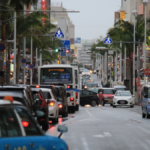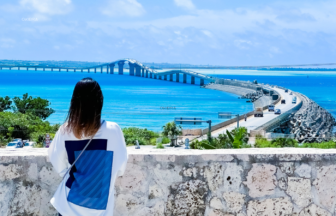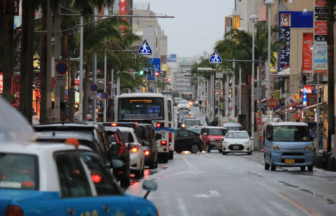




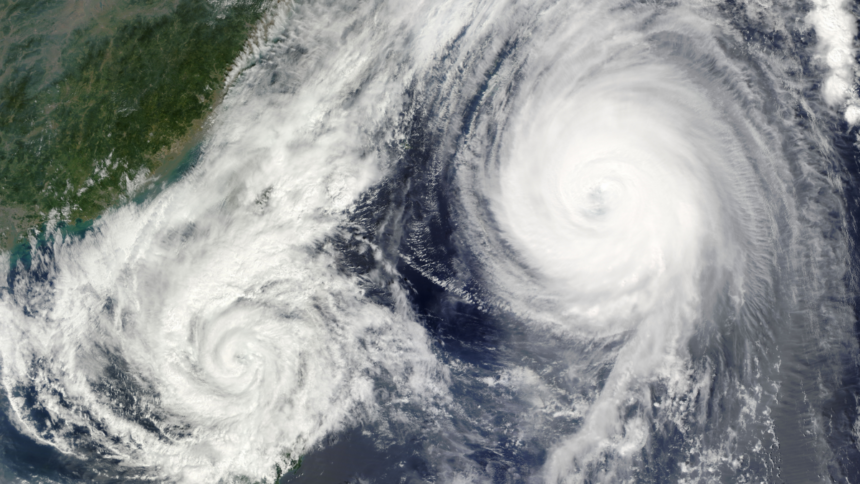
Okinawa is a popular tourist destination known for its warm climate and beautiful ocean, but caution is advised during typhoon season. Typhoons are tropical cyclones that form in the Pacific Ocean and often move northward from the southern part of Japan. Since Okinawa lies along their path, typhoons occur frequently there, especially from summer through fall.
Knowing which months have the most typhoons will make it easier to plan your trip!
Number of Typhoons Approaching Okinawa (Number of Typhoons Formed) Over the Past Five Years
| Month\Year | 2025 | 2024 | 2023 | 2022 | 2021 | 2020 | Average |
|---|---|---|---|---|---|---|---|
| January | Approaches: 0 / Incidents: 0 | 0/0 | 0/0 | 0/0 | 0/0 | 0/0 | Approach 0 / Occurrence 0.3 |
| February | Approaches: 0 / Incidents: 0 | 0/0 | 0/0 | 0/0 | 0/1 | 0/0 | Approach 0 / Occurrence 0.3 |
| March | Approaches: 0 / Incidents: 0 | 0/0 | 0/0 | 0/0 | 0/0 | 0/0 | Approach 0 / Occurrence 0.3 |
| April | 0/0 | 0/1 | 0/2 | 1/1 | 0/0 | Approach 0 / Occurrence 0.6 | |
| May | 1/2 | 1/1 | 0/0 | 0/1 | 0/1 | Approaches 0.4 / Occurs 1 | |
| June | 0/0 | 2/1 | 0/2 | 1/2 | 0/1 | Approach 0.6 / Occurrence 1.6 | |
| July | 1/2 | 1/3 | 3/2 | 1/3 | 0/0 | Approach 1.5 / Occurrence 3.7 | |
| August | 2/6 | 1/6 | 2/5 | 3/4 | 4/8 | Approach 2.2 / Occurrence 5.7 | |
| September | 3/8 | 2/2 | 4/7 | 1/4 | 2/3 | Approach 1.9 / Occurrence 5.0 | |
| October | 1/3 | 1/2 | 0/5 | 0/4 | 1/6 | Approach 1.1 / Occurrence 3.5 | |
| November | 1/4 | 0/0 | 0/1 | 0/1 | 0/3 | Approach 0.3 / Occurrence 2.2 | |
| December | 0/1 | 0/1 | 0/1 | 0/1 | 0/1 | Approach 0 / Occurrence 1.0 | |
| Total | 0 | 8 | 6 | 7 | 7 | 6 | Approaches 7.7 / Occurs 25.1 |
1. Approaching Okinawa Prefecture: The center of the typhoon is approaching Naha, Nago, Kumejima, Miyakojima, Ishigakijima, Iriomotejima,
This refers to entering within 300 km of a meteorological office or similar facility on either Yonaguni Island or Minami-Daito Island. The number in parentheses indicates the number of times the system has approached Okinawa Prefecture.
2. If a typhoon approaches during two different months, it is counted in both months. The total may not add up.
Ranking of the Number of Typhoons Approaching Okinawa
What the Data Reveals
1. Comparison of August and September
Frequency: August 5.6 times / September 4.8 times
Although the number of typhoons approaching Japan is the same in both August and September, since more typhoons form in August, unstable weather conditions typical of newly formed typhoons are expected to persist. In other words, there is a higher probability of being affected by typhoons in August, so you’ll need to check the weather forecast frequently. Although the number of typhoons forming in September is slightly lower than in August, the number of typhoons approaching the region remains the same, so you should exercise caution when planning your trip.
2. Comparison of October and June
Frequency: October 4.0 times / June 1.2 times
Although the number of times typhoons approached Japan was the same, the number of typhoons that formed in October was more than three times higher. This is thought to be because many of the typhoons that form in October originate in the waters near Japan and can have a direct impact on the country.
In June, there are still relatively few typhoons, and even if one does form, it’s unlikely to affect Okinawa. In October, because more typhoons form, the weather is more likely to take a turn for the worse even if a typhoon doesn’t approach, so travelers should check the long-range forecast carefully for peace of mind.
3. The Significance of July
Frequency: 2.0 times
Compared to August and September, July is a relatively safe travel season with fewer typhoons. However, typhoons that form in July may continue to affect the region well into August, so travelers should exercise caution, especially when traveling toward the end of the month.
4. Typhoon Activity in May and November
Number of close encounters in November: 0.2 / Number of occurrences: 1.8
May is the time of year when typhoons begin to form, but they rarely approach the region, and their impact is relatively minor. In November, while the number of typhoons approaching the region is low, the number forming is somewhat higher. As a result, even if a typhoon does not approach, there is a possibility of indirect weather disturbances. It can be said that November is a time when “few typhoons approach, but there are still changes in the weather.”
Summary
Although the number of close approaches is the same in August and September, there are more occurrences in August, suggesting that weather fluctuations may be more significant.
Although the number of close approaches is the same in October and June, there are more occurrences in October, so weather changes are more severe.
July is relatively stable, with little impact from typhoons, but caution is advised toward the end of the month.
Although the number of typhoons is low in May and November, the weather is more likely to take a turn for the worse in November.
There are various possibilities, but then you’d end up wondering, “When should I go?!” So, in the end,I hope it'll be sunny when I want to goThat's the only option.
Typhoon data isn't always the whole story
Although this seems to contradict the data presented here, according to the “weather occurrence rate” data, it is also typhoon season"October in Naha (Okinawa Main Island) is the sunniest time of the year."That's right. That said, since the weather was pretty bad last October (2024), I can't say for sure, but on average, October is definitely sunny.
Also, July is the month with the most sunny days on Miyako Island and Ishigaki Island. It’s hard to just assume that typhoon season means bad weather.
As you can see, the more you look into it, the more confusing it gets, so I think it’s best not to overthink it! Just travel whenever you feel like it. As for whether it’ll be sunny or not, let’s just hope for the best.
Frequently Asked Questions
When is typhoon season in Okinawa?
Typhoon season runs mainly from June through October, with the highest number of typhoons occurring in August and September.
What is the month with the most typhoons in Okinawa?
August and September see the highest number of typhoons forming, and many of them approach Okinawa Prefecture. Please exercise caution when traveling.
Which months have the fewest typhoons?
The months with the fewest typhoons are April through the first half of June, and November. These periods are relatively calm, making them ideal times to travel.
If a typhoon approaches Okinawa, how long will the effects last?
The effects of a typhoon usually last for several days, but in the case of a powerful typhoon, they can sometimes persist for about a week even after it has passed.
What happens to Okinawa's tourist attractions when a typhoon forms?
During a typhoon, many tourist attractions are closed, and it is recommended that you stay at a hotel or other lodging facility. Please put your safety first.
What should I do if my flight is canceled due to a typhoon?
If your flight is canceled or delayed due to a typhoon, please follow the airline’s instructions to arrange a replacement flight or process a cancellation.
Summary

A look at the data shows that July through September—the typhoon season—is also a time when the number of travelers to Okinawa increases.Avoiding July through September means you’ll be avoiding not only typhoons but also the peak travel season in Okinawa.. If that happens, there will be relatively fewer tourists, making it easier to sightsee, and by avoiding the peak season, you can significantly reduce the cost of your trip to Okinawa (prices are especially high during Obon and the year-end and New Year holidays).